GREEN KALIP MAKINA — a parts catalogue for plastics recycling lines
An industrial catalogue for a Turkish manufacturer of cutting parts: selection by equipment brand and model, filters by part group and compatibility, three languages, PDF catalogues, consulting and a single quote form with a drawing attached.
GREEN KALIP MAKINA (green-polymer.tech) is a Turkish manufacturer from Istanbul that grinds and stocks cutting parts for plastics recycling and compounding lines: rotor and bed knives, screens and spare parts for laser filters, die plates, screw elements, pelletiser knives, sieves and spacers. The buyer here is not a consumer but a process engineer or a plant’s purchasing department, and they have exactly one question: will this part fit my machine. So the whole site is built around equipment compatibility rather than around a shop window with a “buy” button.
Technology stack
WordPress with a custom theme — no page builders and no ACF: the content fields run on our own metabox engine. The catalogue is not WooCommerce, because there is no shop: it is custom post types for parts, consulting areas, PDF catalogues and the team, plus taxonomies for part groups, compatibility brands and materials. The site is trilingual (English as the default, Russian and Turkish) on Polylang, and the header was built with room to spare: the switcher and the menu stay intact even with five languages. Forms are Contact Form 7 with reCAPTCHA and a drawing attachment; the mail runs on the client’s own domain.
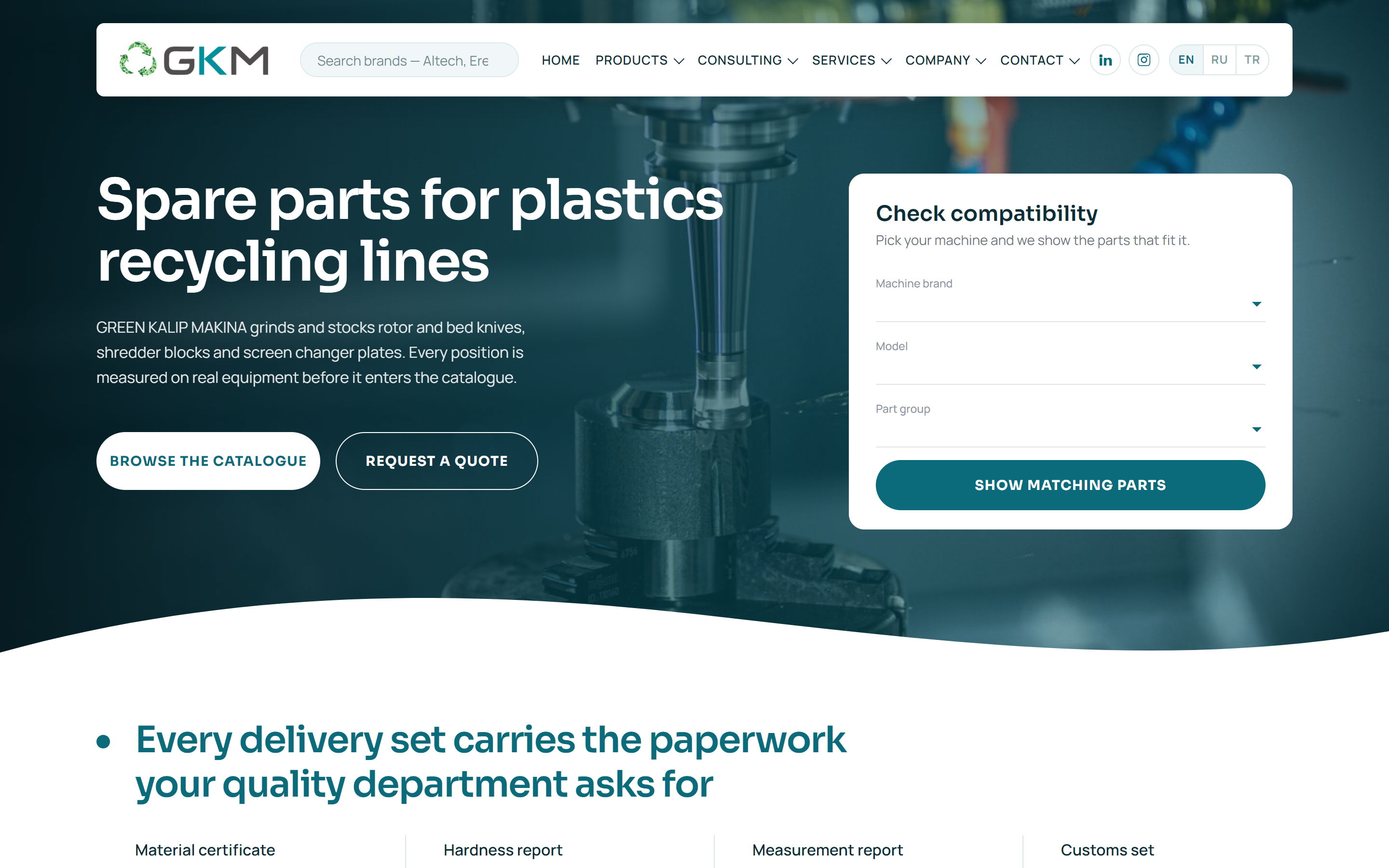
The home page as a selection tool
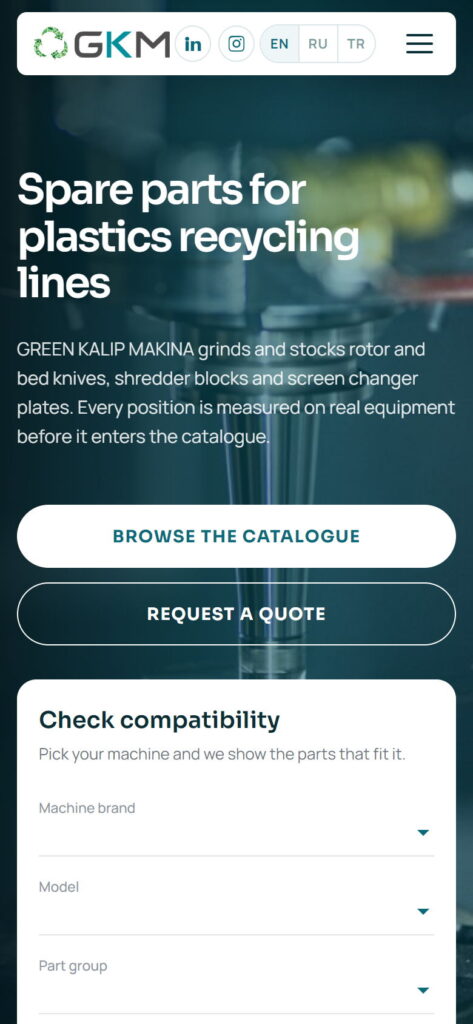
Instead of the usual “hello, we are a company”, the first screen asks you to pick your machine: brand → model → part group. Below it come the documents that ship with every delivery (the quality department’s first question), the part groups, compatibility, the numbers, consulting, the PDF catalogues, the team and the quote form.
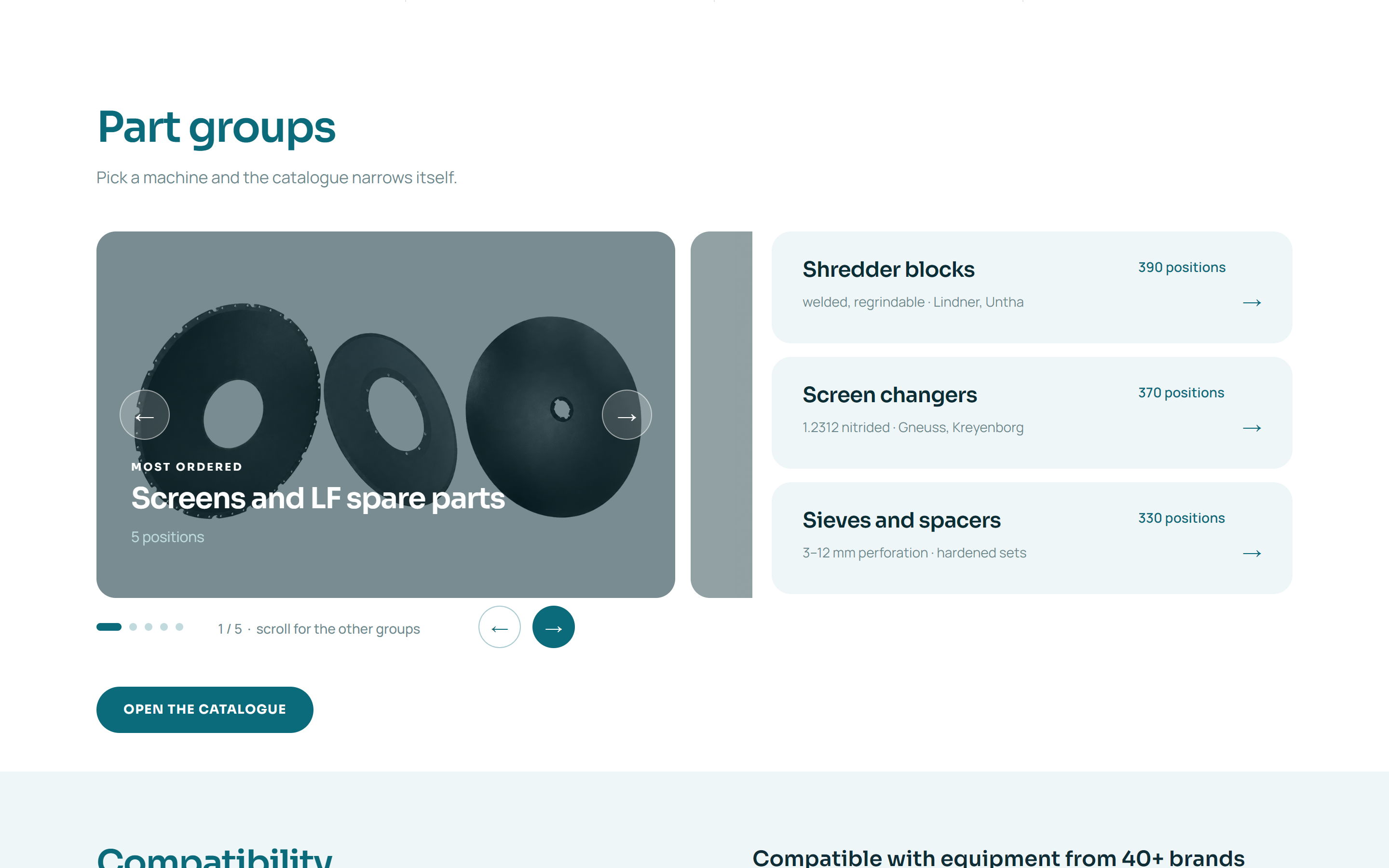
Part groups
The range is split into groups — compounding and recycling, laser filter screens, die plates, screw elements, pelletiser knives, rotor and bed knives. Each group leads into its own catalogue section, so nobody has to scroll a single list of hundreds of positions.
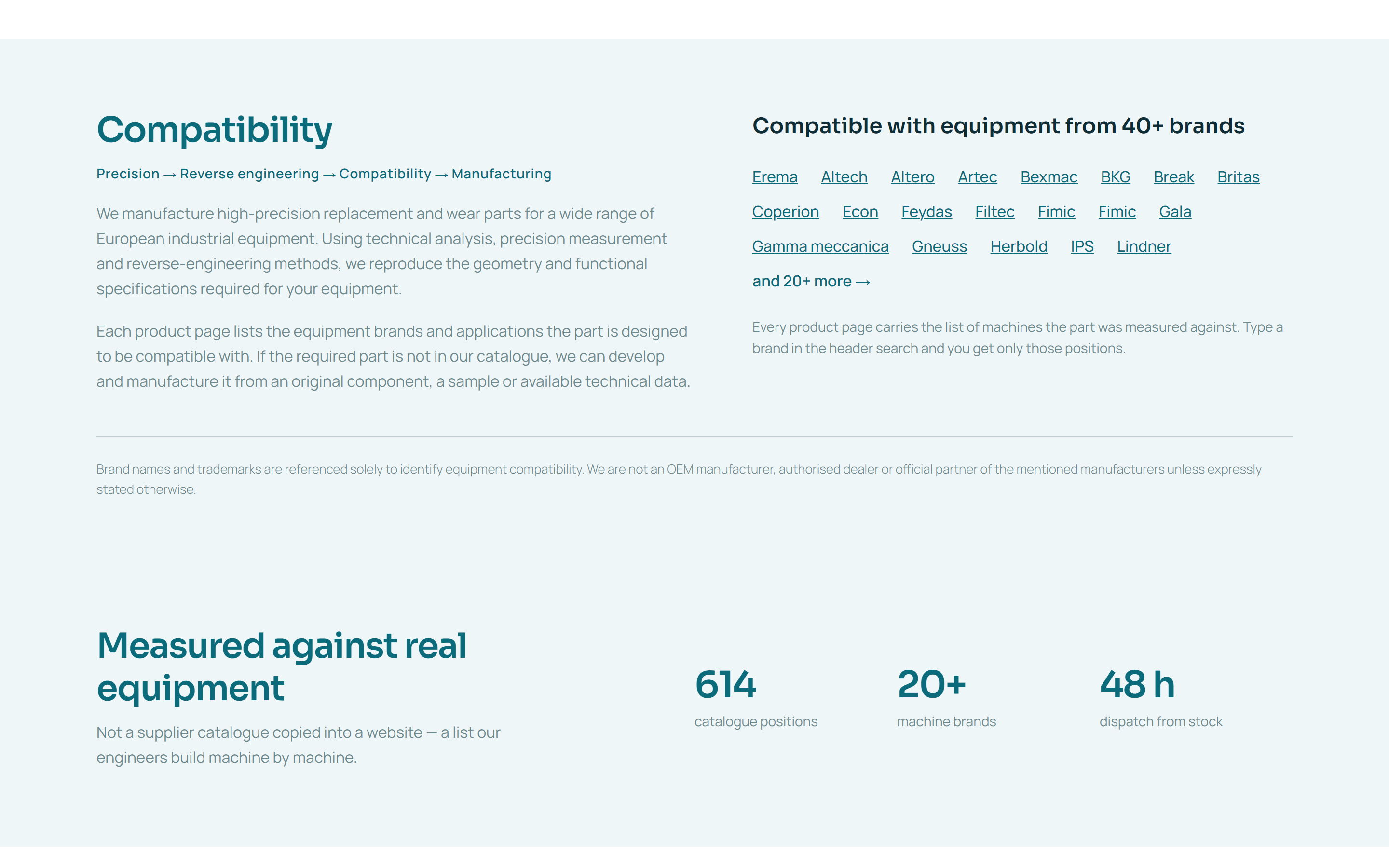
Compatibility
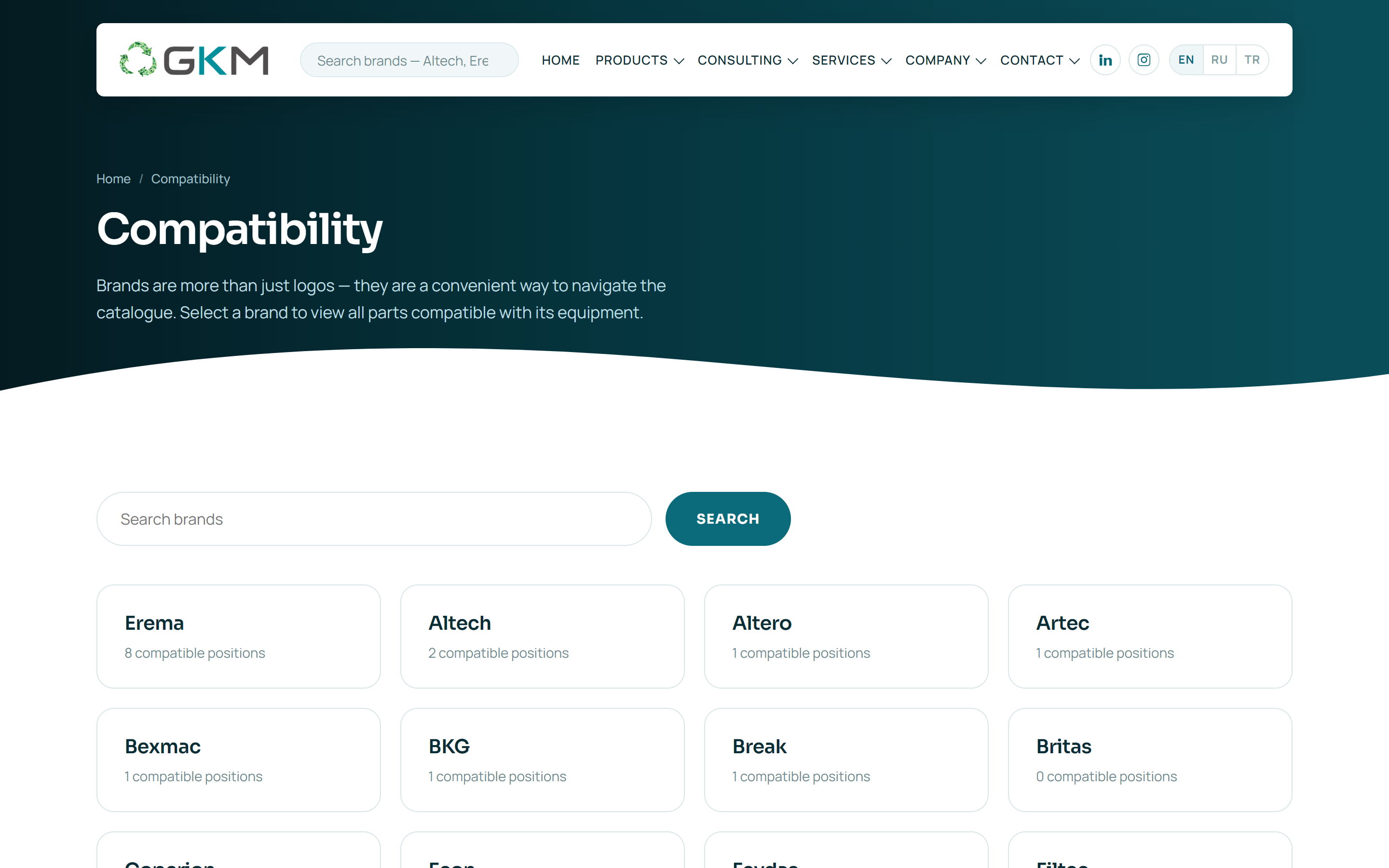
This is the key idea of the whole project: parts are linked to equipment brands, and the buyer sees the compatibility right on the product card. The brands are a taxonomy of their own with their own pages, and the header search does not look through product names — it looks through machine brands: type “Erema” and you get what fits it.
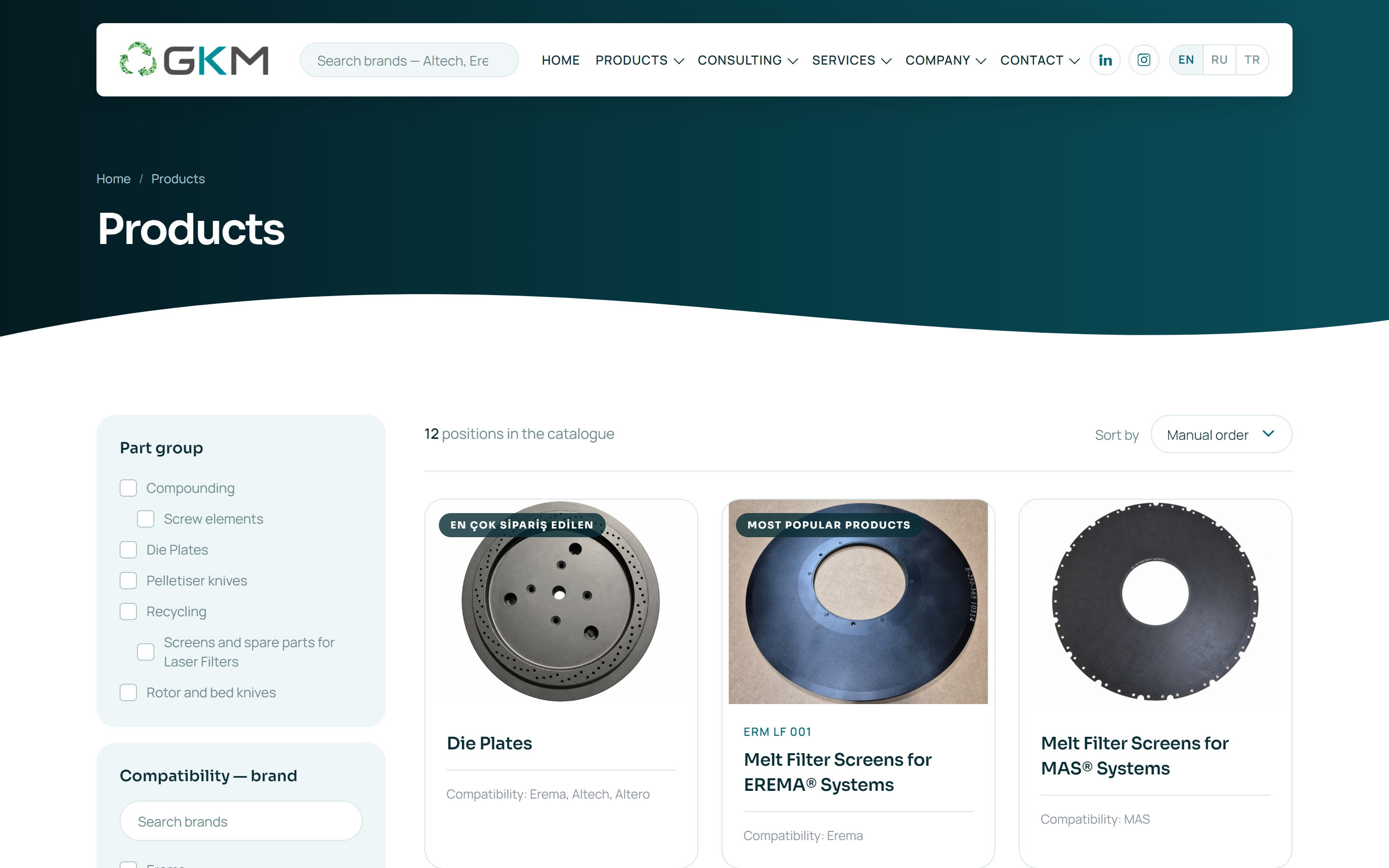
The catalogue and the part page
The product archive is a grid of cards with two filters at the side: part group, and compatibility brand with its own brand search. The card shows the article code, the name and the compatibility line straight away, and the badges (“most popular”, “most ordered”) are set from the admin.
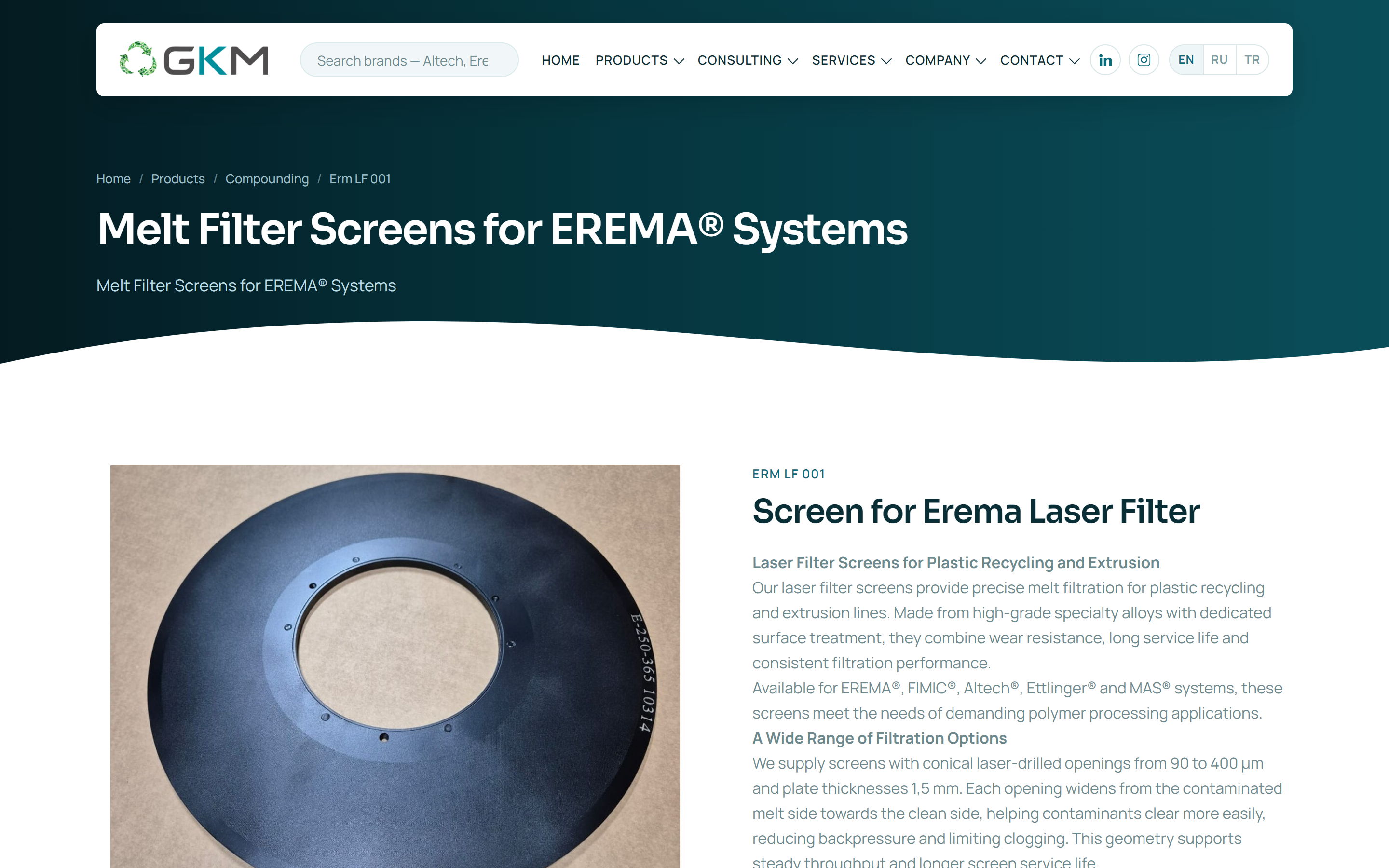
The part page is written for a technical buyer: the article code, a photograph of the actual part, a description of the material and the treatment, the available ranges (for example, openings from 90 to 400 µm and plate thicknesses), the systems it fits and a quote button. There are deliberately no prices — in this segment they are quoted per order.
Inner pages
Compatibility brands
The brands section is both navigation and SEO: a page per equipment brand collects every part made for it. Those are exactly the queries process engineers type — “spare parts for …”.
Consulting
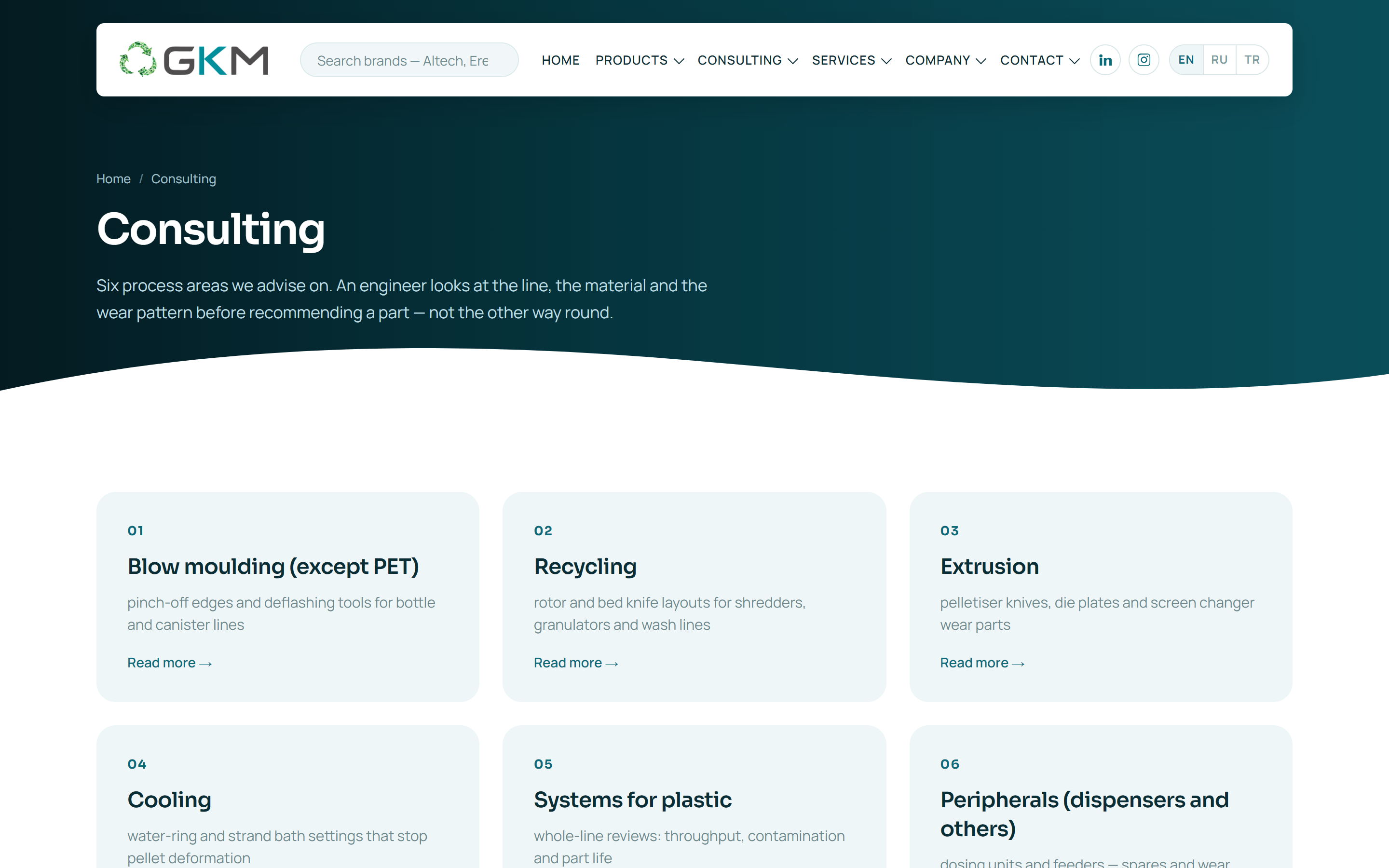
Besides parts the company sells engineering expertise — a separate section with its areas: blow moulding (except PET), recycling, extrusion, cooling, systems for plastic, peripherals. That is the second stream of enquiries, and it lives on its own post type rather than on a text page.
E-catalogues and the team
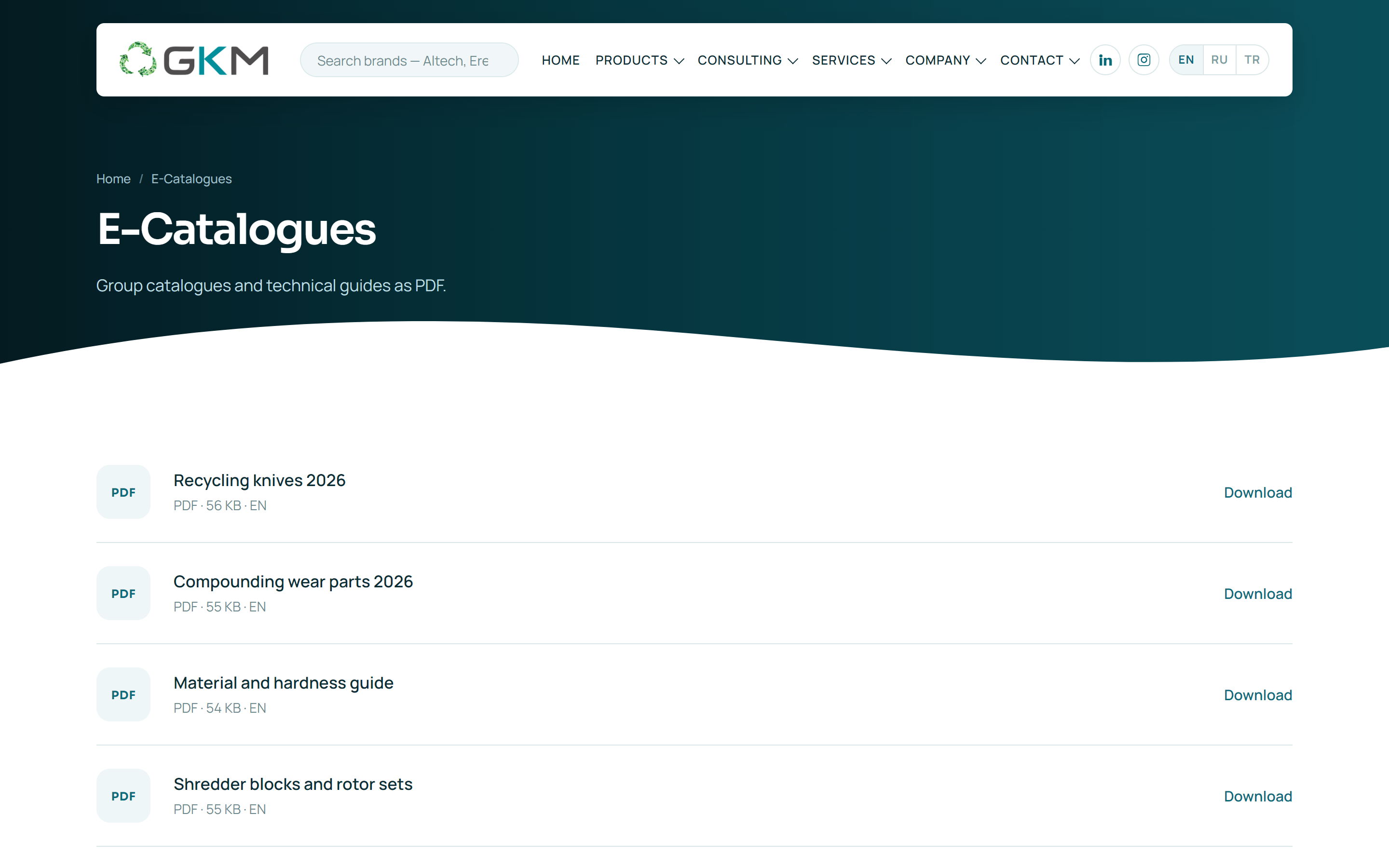
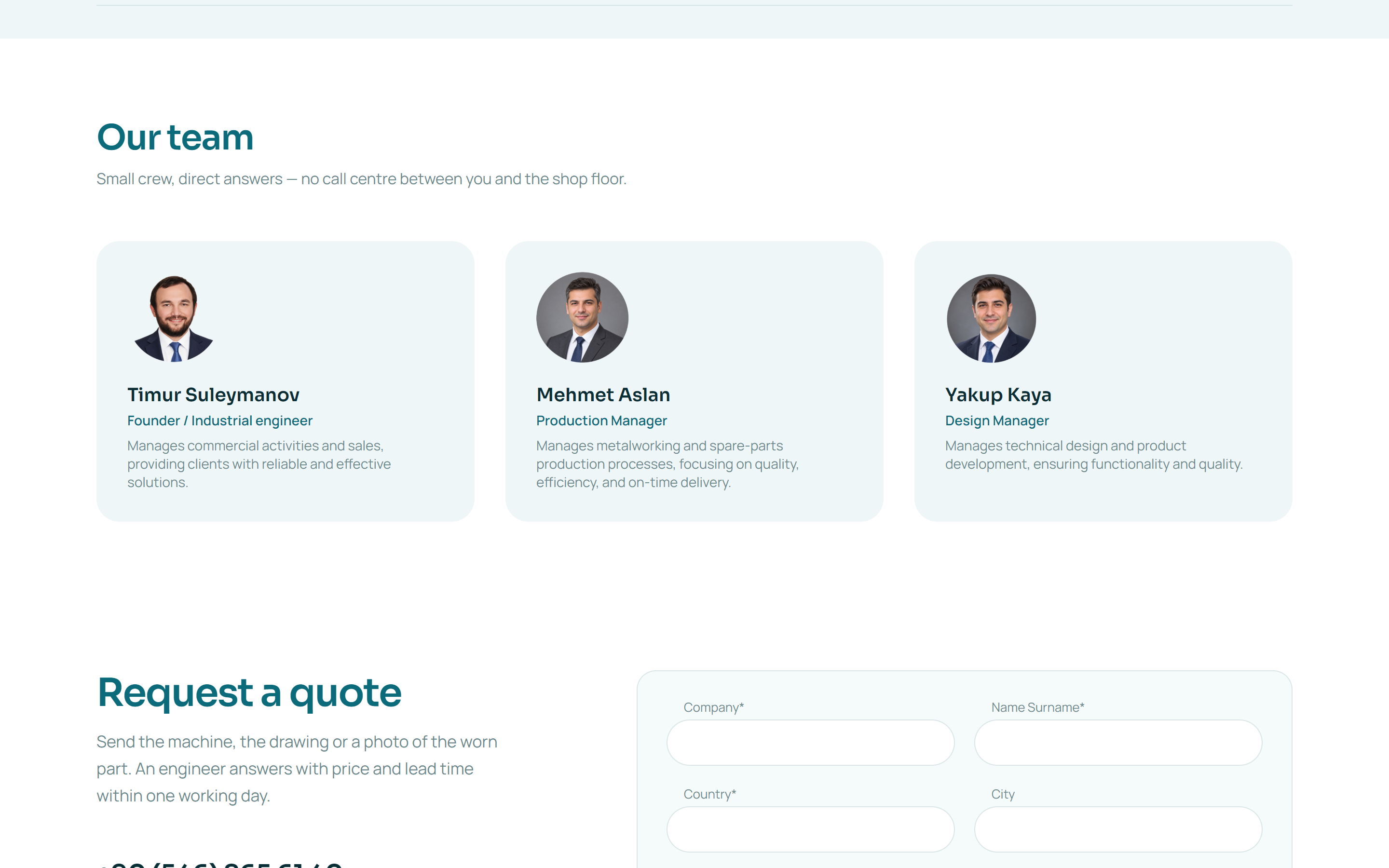
The group PDFs and technical guides (a material and hardness guide, for instance) sit in a section of their own with the file size and language — in B2B that PDF is often exactly what gets forwarded inside a company for approval. The team page puts faces and direct contacts on the managers, which in industrial sales is part of the trust.
The quote form
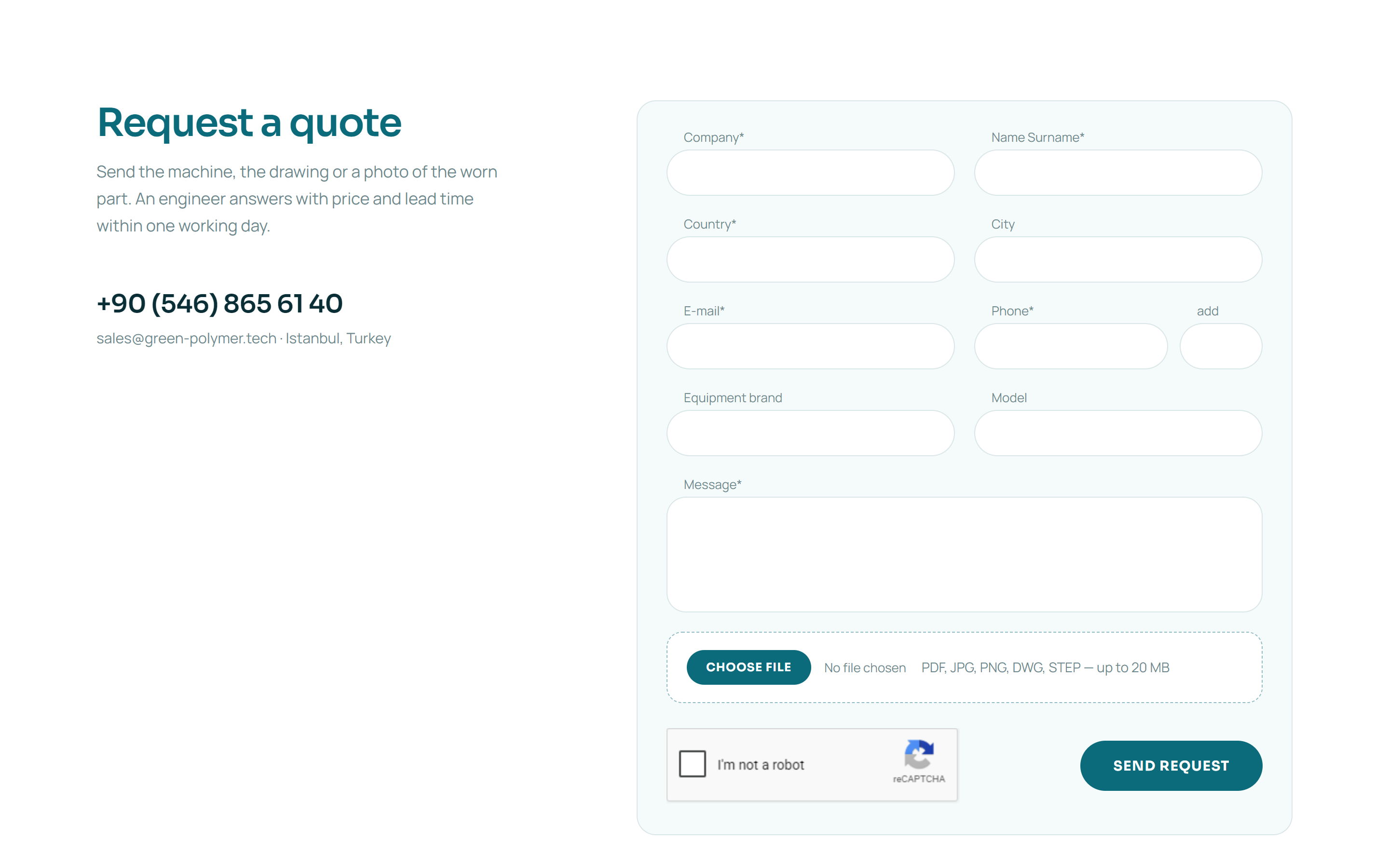
Every conversion on this site is one thing — a request for a quote — so the form is identical everywhere and is exactly what the client asked for: company, name, country and city, email, a phone with a separate extension field, the equipment brand and model, a message and, crucially, the option to attach a drawing. The attachment genuinely reaches the manager’s inbox rather than disappearing inside the form.
The mobile version
Parts are often looked up on a phone on the shop floor, so on mobile the compatibility picker stays on the first screen, the group carousels swipe, the catalogue filters collapse into a panel, and the phone number and email are one tap away.
Summary
green-polymer.tech is an industrial catalogue whose value sits in the data model rather than the design: a part knows its group, its material and the equipment brands it fits, and out of that single relationship grow the hero picker, the catalogue filters, the brand search, the brand pages and the compatibility line on every card. Add three languages, PDF catalogues, consulting as a section of its own and one tidy quote form with a drawing attached — everything a plant needs to get from “will it fit?” to an email in a manager’s inbox.